

By: Abby Lee
Saint-Martin, a neighboring island to Anguilla, has launched a new initiative to create a unifying flag for themselves. Saint-Martin began governing itself as a French Overseas Collective in 2007, but has yet to have a flag that is truly its own and celebrates the culture that the island holds. It is an island that celebrates its diversity amongst different cultures of French, Dutch, and Caribbean. The goal of this new initiative is to encourage unity and community within Saint-Martin, with democratic voting being the first option to choose a new flag to represent this island.
From a design perspective, vexillography is the art of creating flags. Designing flags is all about capturing the culture and symbolism of a nation and putting it into a simple format to convey that message to anyone who looks at it. Flags have been around for centuries, dating back to BCE in ancient Egypt and 11th century China. They were initially brought into battle and used to indicate different parts of the military, but now the designing of flags has evolved into a lot of different uses. While the designing of flags has been around for so long, the actual term of ‘vexillography’ and the study of it wasn’t coined until 1957, by a man named Whitney Smith who wanted to put a name to what he had already been doing for decades. Ten years after the term was coined, the North American Vexillological Association was founded and then followed by the International Federation of Vexillological Associations which hosts a biennial gathering of flag scholars all over the globe. (Flags for Good, N/D).
When Vexillographers design flags, they follow five simple rules.
For Saint-Martin, the nominees aimed to capture the multicultural aspect of the island and showcase the history of its formation and perseverance, while also highlighting the optimistic outlook for the future of the island. They were able to express their ideas by picking a few different colors that showed up a lot during the voting process; those included a variety of shades of red, blue, green, and yellow. The blue, green, and yellow could be reflective of their abundant sunshine, natural and sprawling greenery, beautiful beaches and clear waters, while the red is meant to relay the vibrancy of their community. A lot of the flags nominated also held depictions of a brown pelican, which is the national bird of Saint-Martin. To the citizens of Saint-Martin, the depiction of a brown pelican on their national flag is a sign of pride and strength within the community. It is also another way to show a major aspect of the island’s natural beauty and wonders that all of nature has to offer. The design aspect of creating the flag for Saint-Martin already has an advantage because it is being created and voted on by the citizens who live there, looking for a flag that uniquely represents Saint-Martin.
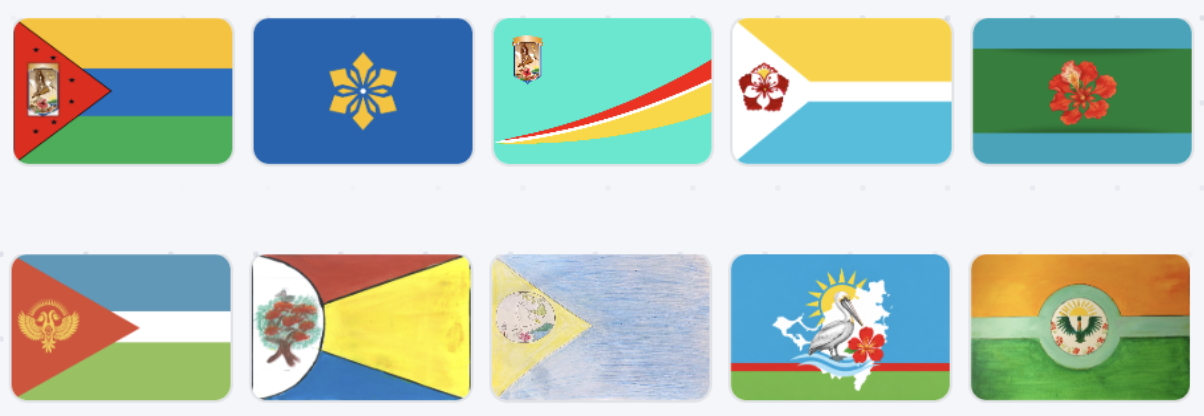
The decision to determine what kind of flag will represent Saint-Martin is important. But they chose to do it in the best way possible, through making a flag that is reflective of the culture and history that comes with the island and including the citizens in that significant decision. With the voting for the new flag coming to an end soon, it is only a matter of time until the new flag is announced, with the final design aiming to be unveiled in December 2026
References
Green, Michael. (n.d). What is Vexillology: A Flag Expert Explains. Flags For Fun. https://flagsforgood.com/blogs/news/what-is-vexillology?srsltid=AYCX9vIlo10UplDACrsXp3Ky_rOpiG_HAMPQ00dc5rebKvH_9coBmKeB


